Construction of finite fields for use in checking
Let  denote a finite algebraic field with
  elements. It is well-known that, for a given , all fields are “simply isomorphic”, and therewith, for our purposes, identical. We shall consequently refer, without restraint, to ”the field .”
If  is a prime positive integer greater than
  ,
,  is called, according to the terminology of Section 8, Example 2, a ”primary” field. Explicit addition tables, as was noted in section 8, are hardly required in deal ing with primary fields. The most useful of these fields, in telegraphic checking, are probably
  ,
,  ,
,  , and
, and  . The field will be considered in detail in what follows.
The number of elements in a non-primary finite algebraic field
is a power of a prime. If we have

where and  are positive integers greater than , and is prime, the non-primary field
  may be constructed very easily by algebraic extension of the field . Explicit addition table is needed when working with a non-primary field. Otherwise, checking operations are exactly the same as in primary fields.
Example: The field  with the elements (marks)
  , has the tables


By adjoining a root of the equation  , an equation which is irreducible in , we easily obtain the field
  with marks

where  and
and  denote elements of . The marks of are thus

These marks (elements) are combined, in the rational field operations of , according to the reduction formula  . If we label the marks of as follows

the addition and multiplication tables of the field are given as in
Section 8, Example 1.
In a like manner,  can be obtained from by adjunction of a root of the equation
  , which is irreducible in and . The marks (elements) of are

where  are elements of . They are combined, in the rational operations of according to the reduction formula
  .
.
Example: The field  with the elements (marks)
  , has the tables


By adjunction of a root of the equation  , which is irreducible in the fields ,
  ,
,  and
and  , we easily obtain the field
  . The marks of are

where  are elements of ; and these
  marks are combined, in the rational operations of , according to the reduction formula
  .
.
Example: The field  with the elements (marks)
  , has the tables
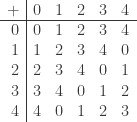

By adjoining a root of the equation , which is irreducible in  , we readily obtain the field
  . The marks of are

where  are elements of ; and these
  marks are combined, in the rational operations of , according to the reduction formula .
Of the non-primary fields, , , are probably those which are most amenable to practical application in telegraphic checking.




 only, the
  being correctly transmitted, then the presence of error is certain to be disclosed.

 , and if at least one of the particular elements
  is correctly transmitted, the presence of error will certainly be disclosed. But if exactly three errors are made, affecting presicely the elements
  (
( ) chance of escaping disclosure.
 (
( ) chance of escaping disclosure.


 can be written
  , or
, or  .
.
 can be made quite arbitrarily. But then the values of
  and
and  are then completely determined. There is evidently a

 .
. is the only vanishing determinant of any order in the matrix employed, all other assertions made in (1′) and (2′) are readily justified. This will be made clear in the following sections.
 is the distance from the center of the lens to the principal focal point of the lens. This is illustrated below.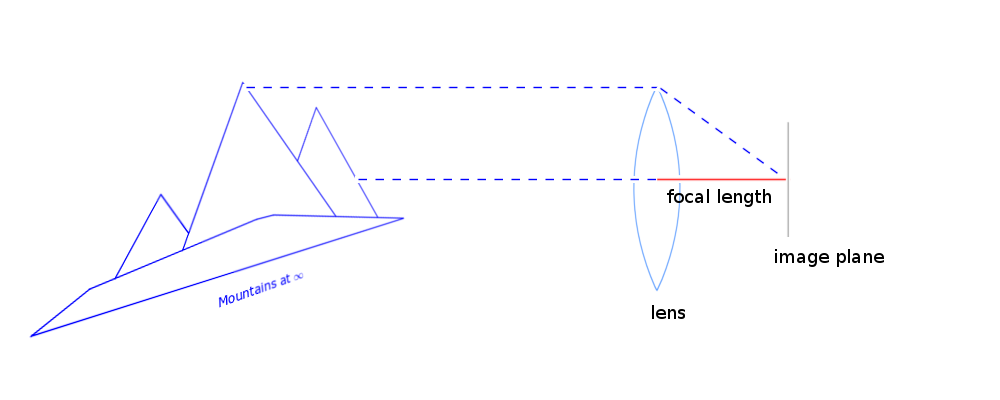
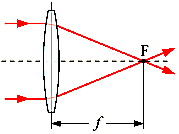
 in front of the lens. This light will meet the sensor plane but its image in the photo, depending on the value of
  .
. .
. mm. To focus an object 1 m away (
 mm), we solve for
  . Therefore, the lens must be moved 2.6 mm further away from the image plane, to
  mm.
mm.
 is an opening which is half the focal length, so if
  (read “the f-stop is N”, where
  ) then
  is called the f-number or f-stop. Two apertures (or f-stops) are said to differ by a full stop if they differ by a factor of
  . Usually the stop numbers fall into the sequence


 be a prime power such that
  . Note that this implies that the unique finite field of order
  , has a square root of
  . Now let
  and
and
 if and only if
  . By definition
  is the
  (with multiplicity
  (both with multiplicity
  , where
  has order
  .
. ” above; I was having trouble rendering it in html.) Below is an example.
 , it has only three distinct eigenvalues, and its automorphism group is order
  .
. :
: :
: Yet Another Mathblog
You must be logged in to post a comment.